
An English version of this article is available below ↓
Cette année, mon travail m’a amené dans la merveilleuse ville de Rio de Janeiro pour la 18e édition de la conférence internationale en management des arts et de la culture. Cette année, ce sont plus de 260 chercheuses et chercheurs en gestion des arts de 31 pays qui se sont réunis pour échanger sur les meilleures pratiques dans le domaine et pour partager les résultats de leurs projets de recherche.
Personnellement, j’ai eu la chance de présenter avec ma collègue Caroline Marcoux-Gendron les résultats de notre étude sur la fréquentation des activités artistiques par leurs publics issus de l’immigration, ainsi que d’assister à la toute première conférence académique de Vivianne Magnan-St-Onge, étudiante au Ph. D. à l’ESG UQAM et diplômé de notre programme de maîtrise en marketing.
Une conférence unique
Ce qui est fascinant avec cette conférence, c’est vraiment la variété des sujets abordés. Dans la même journée, j’ai pu en apprendre sur les mécaniques de storytelling derrière l’empire Taylor Swift (durant une présentation de Paola Signori), découvrir grâce à la doctorante Irene Tsitse que les enjeux de l’intégration de l’intelligence d’affaires dans le secteur culturel aux Pays-Bas sont essentiellement les mêmes que ceux au Québec et constater à quel point les industries du jeu vidéo et de l’intelligence artificielle sont intimement liées, et ce, depuis leurs tous débuts1Comme l’explique l’équipe de Veritasium dans cette vidéo, on doit ultimement la solution au problème de prédiction de la structure des protéines aux outils développés par DeepMind pour gagner au jeu de GO, aux échecs ou encore à Starcraft II (merci Pierre-Jean Benghozi).
Un peu comme j’avais fait en 2024 lors de la conférence de l’AIMAC à Lisboa, je vous propose ici quelques faits saillants de conférences qui m’ont marquées.
A typology of performing Arts initiators : conceptualizing their social and logistical roles
Par Élodie Santos
(HEC Montréal)
Dans le cadre de son projet de recherche partenariale mené conjointement avec CAPACOA, Orchestres Canada, PACT et le Centre national des Arts, Élodie Santos s’attarde au rôle clé que certains consommateurs peuvent jouer dans le secteur culturel, soit celui d’initiateurs.
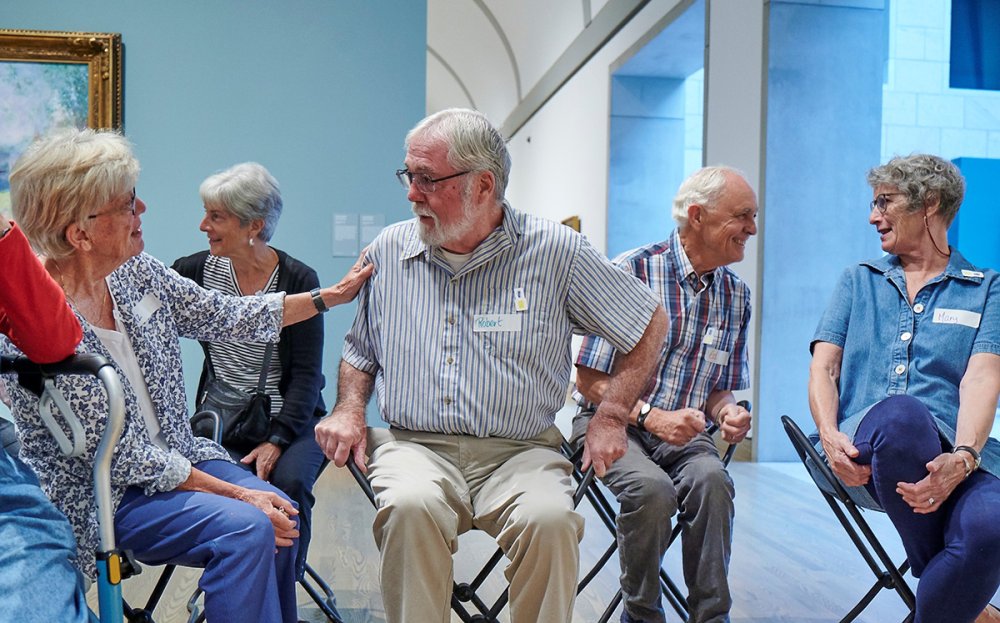
Les initiateurs sont des particuliers (non affiliés à un organisme culturel) qui décident pour des raisons variées d’organiser des sorties culturelles avec des membres de leur entourage ou de leur communauté. Parfois, l’initiateur peut être un oncle qui organise régulièrement des sorties au théâtre avec ses nièces, parfois une résidente de RPA qui planifie de façon organique (sans soutien direct de la résidence) des visites mensuelles au musée avec ses voisins. D’après Élodie Santos, les initiateurs sont source d’opportunités majeures pour les organismes culturels souhaitant améliorer la fidélité de leurs publics de par leur proximité et leur impact sur leurs micro-communautés.
À partir des résultats du premier volet qualitatif de son projet, Élodie Santos nous a proposé une typologie distinguant 4 grands types d’initiateurs selon leurs motivations (intrinsèques ou extrinsèques) et sur le degré d’importance qu’ils accordent soit à la performance artistique en elle-même ou à l’expérience sociale liée à cette même performance. Pour certains, une sortie sera réussie d’abord si le spectacle est de grande qualité, tandis que, pour d’autres, c’est d’abord l’aspect social de l’activité qui compte. C’est un projet que j’ai trouvé fort intéressant dans l’ensemble, puisqu’il met de l’avant un autre type d’influence (un initiateur n’est pas un leader d’opinion ni un influenceur!) et qui est à la portée des organisations artistiques.
How Climate Films Perform: Strategic Symbolic Combinations from Box Office to Audience Engagement
Par Shirin Yazgulieva (IMT Atlantique), Inna LyuBareva (IMT Atlantique), Allègre Hadida (Cambridge) et Tom van Laer (SKEMA)
Dans cette intéressante présentation, l’équipe d’autrices cherchait à répondre à la question suivante : comment faire des films de fiction sur les changements climatiques qui sont à la fois pertinents d’un point de vue social ET commercialement viable?
Pour répondre à leur question, l’équipe a identifié 60 films appartenant au genre Cli-fi (si vous êtes aussi néophytes que moi, le terme Cli-fi réfère à des films qui évoquent de près ou de loin les changements climatiques et inclut autant des œuvres comme Erin Brokovich ou Don’t Look Up que des blockbusters comme Avatar ou Interstellar). Yazgulieva et ses collègues ont ensuite utilisés des outils de NLP2Traitement naturel du langage pour caractériser les différents aspects persuasifs qui se trouvent dans les scénarios, description audio et synopsis des films.
Dans l’ensemble, j’ai retenu deux faits saillants de cette étude. D’une part, pour qu’un film soit à la fois un succès commercial ET un succès social (i.e. un film qui génère beaucoup de discussions), il faut d’abord et avant tout que celui-ci soit divertissant. Bref, pour qu’une œuvre ait un impact dans la société, il faut d’abord qu’elle soit intrinsèquement intéressante. D’autre part, les productions qui font participer des scientifiques tendent à avoir plus de succès, autant au box-office que en termes de discussion, tandis que les activistes ont seulement un impact sur la participation sociale (et non pas sur la performance commercial des œuvres). Est-ce que les scientifiques paraissent plus objectifs auprès du grand public? À suivre!

The impact of AI adoption in Creative Industries. The case of Advertising Agencies.
Par Silvia Cacho-Elizondo
(IPADE)
Pour ce troisième résumé de présentation, on s’attaque maintenant à l’intégration de l’intelligence artificielle dans les agences de publicités grâce à une importante étude menée par Silvia Cacho-Elizondo et ses collègues en partenariat avec IAB Mexico (qui est en quelque sorte l’équivalent mexicain de notre A2C québécoise).
Dans le cadre de cette étude, l’équipe de recherche a interrogé 97 hauts gestionnaires d’entreprises du secteur publicitaire mexicains quant à leurs perceptions sur les avantages, mais aussi les barrières quant à l’utilisation de l’IA dans leurs agences. Un des aspects particulièrement intéressant de cette étude est d’offrir une perspective autre qu’anglo-saxonne sur l’IA (qui est probablement fortement biaisé envers le savoir anglo-americain) ce qui résonne évidemment avec ma propre perspective francophone et québécoise.
Dans l’ensemble, les résultats de cette étude suggère que les agences souhaitent (ou ont déjà) intégrer activement les différents outils d’intelligence artificiel dans leurs pratiques, mais les avantages de cette intégration ne sont pas encore super clairs. Bien entendu, l’IA permet à plusieurs agences de créer plus rapidement du contenu et d’améliorer l’organisation du travail (courriels, contrats, etc.), mais plusieurs gestionnaires voient apparaître un problème de différenciation : si tout le monde utilise les mêmes outils (principalement ChatGPT), il y a un fort risque que les campagnes soient toujours les mêmes.
De plus, d’après Cacho-Elizondo, plusieurs barrières importantes nuisent à l’adoption complète et pérenne de l’IA dans le secteur publicitaire mexicain, que ce soit un manque d’employé qualifié, de mise à jour de la main d’œuvre ou encore un manque de budget (un enjeu qui risque d’augmenter avec les nouvelles méthodes de facturation des tokens). La solution? Développer des nouveaux modèles de maturité IA (analogue à ceux de maturité numérique), partager davantage les bonnes pratiques et améliorer les programmes de formation. À ce titre, l’ESG UQAM offre depuis peu un DESS en marketing numérique et intelligence artificielle intégrée au marketing.
Creative collaborations: explaining joint cultural production in music
Par Juan D. Montoro-Pons, Maria Luisa Palma-Martos et Manuel Cuadrado-García (Valencia)
Depuis les années 2000, le phénomène du featuring (soit la contribution d’un artiste à l’oeuvre d’un oeuvre, publicisé avec le terme feat.) a explosé dans l’industrie de la musique; dans le top 100 mondial, nous sommes passés d’un taux de featuring d’environ 5% à 30% aujourd’hui.
Pourquoi les collaborations sont aussi fréquentes de nos jours? On peut évidemment déduire que plusieurs musiciens sont motivés par des considérations artistiques, mais on sait également que les featuring peuvent avoir un effet de promotion croisée important sur les chansons (C’est notamment ce qu’ont montré McKenzie et al., 2021 dans un article publié dans le Journal of Cultural Economics) : par exemple, une collaboration augmente naturellement le nombre de « pages » sur lequel les chansons sont intégrées sur Spotify ce qui ultimement, aide à rejoindre un plus grand nombre.
Or, si certains auteurs se sont déjà attardés à l’efficacité des collaborations musicales, on ne sait pas encore super bien quelles sont les collaborations qui sont les plus probables. C’est spécifiquement cet enjeu que Montoro-Pons, Palma-Martos et Cuadrado-Garcia ont choisi d’étudier. Ainsi, l’équipe de chercheurs espagnols a assemblé un important jeu de données de près de 8000 chansons produites par un peu moins de 2900 artistes, afin d’identifier les caractéristiques rendant les collaborations les plus probables.
Une de leur principale question était de savoir si les collaborations sont d’abord et avant tout guidées par un simple effet de réseau (les artistes choisiraient ainsi leurs collaborateurs principalement parce qu’ils les connaissent, de près ou de loin) ou si c’est d’abord la compatibilité artistique (en d’autres mots, la similarité) qui compte.
Un de aspect que j’ai particulièrement apprécié dans la présentation de Montoro-Pons et ses collègues, c’est justement les données utilisées pour caractériser la distance entre deux genres (un défi vraiment pas simple auxquels j’ai déjà fait face dans le passé): soit les tags laissés par les mélomanes sur la plateforme Last.fm.
Le principal fait saillant de leur étude : les collaborations sont d’abord et avant tout guidées par une proximité esthétique et langagière. En d’autres mots, un artiste qui fait du trap-rap en français tendra naturellement à collaborer avec d’autres artistes trap francophones. Personnellement, ce résultat est particulièrement ironique considérant que l’on sait maintenant, grâce à un article de Ordanini, Nunes et Nanni (2018), que ce sont les collaborations entre les artistes qui sont esthétiquement les plus éloignées qui tendant à avoir le plus de succès. Bref, les artistes gagneraient à sortir plus souvent des sentiers battus.
Click here to read this article in English
This year, my work took me to the wonderful city of Rio de Janeiro for the 18th edition of the International Conference on Arts and Cultural Management. More than 260 arts management researchers from 31 countries gathered to exchange best practices in the field and to share the results of their research projects.
Personally, I had the chance to present, together with my colleague Caroline Marcoux-Gendron, the results of our study on the attendance of arts activities by audiences from immigrant backgrounds, as well as to attend Vivianne Magnan-St-Onge’s very first academic presentation. Vivianne is a Ph.D. student at ESG UQAM and a graduate of our master’s program in marketing.
What’s fascinating about this conference is the sheer variety of topics covered. In a single day, I got to learn about the storytelling mechanics behind the Taylor Swift empire (during a presentation by Paola Signori), discover — thanks to doctoral student Irene Tsitse — that the challenges of integrating business intelligence into the cultural sector in the Netherlands are essentially the same as those in Quebec, and see just how closely the video game and artificial intelligence industries have been intertwined — and that from their very beginnings3As the Veritasium team explains in this video, we ultimately owe the solution to the protein-structure-prediction problem to the tools DeepMind developed to win at Go, chess and StarCraft II. (thanks, Pierre-Jean Benghozi).
Much as I did in 2024 for the AIMAC conference in Lisbon, I’m sharing here a few highlights from the presentations that stood out to me.
A typology of performing Arts initiators : conceptualizing their social and logistical roles
By Élodie Santos
(HEC Montréal)
As part of her partnership research project — carried out jointly with CAPACOA, Orchestras Canada, PACT and the National Arts Centre — Élodie Santos looks at the key role that certain consumers can play in the cultural sector: that of initiators.
Initiators are individuals (not affiliated with any cultural organization) who decide, for a variety of reasons, to organize cultural outings with people from their circle or community. Sometimes the initiator is an uncle who regularly organizes theatre outings with his nieces; sometimes it’s a resident of a seniors’ residence who organically plans (without any direct support from the residence) monthly museum visits with her neighbours.
According to Élodie Santos, initiators represent a major opportunity for cultural organizations looking to build audience loyalty, thanks to their closeness to — and influence within — their micro-communities.
Drawing on the results of the first qualitative phase of her project, Élodie Santos proposed a typology distinguishing four main types of initiators based on their motivations (intrinsic or extrinsic) and on how much importance they place on either the artistic performance itself or the social experience surrounding it. For some, an outing is a success first and foremost if the show is of high quality; for others, it’s the social dimension of the activity that matters most. Overall, I found this a really interesting project, because it foregrounds another kind of influence (an initiator is neither an opinion leader nor an influencer!) — one that is well within reach of arts organizations.
How Climate Films Perform: Strategic Symbolic Combinations from Box Office to Audience Engagement
By Shirin Yazgulieva (IMT Atlantique), Inna Lyubareva (IMT Atlantique), Allègre Hadida (Cambridge) and Tom van Laer (SKEMA)
In this compelling presentation, the team of authors set out to answer the following question: how do you make climate-change fiction films that are both socially relevant AND commercially viable?
To answer their question, the team identified 60 films belonging to the Cli-fi genre (if you’re as much of a newcomer to this as I was, the term Cli-fi refers to films that touch — closely or loosely — on climate change, and it covers works like Erin Brockovich and Don’t Look Up as well as blockbusters like Avatar and Interstellar). Yazgulieva and her colleagues then used NLP4Natural Language Processing. tools to characterize the various persuasive elements found in the films’ screenplays, audio descriptions and synopses.
Overall, I took away two key findings from this study. First, for a film to be both a commercial success AND a social success (i.e. a film that sparks a lot of discussion), it has above all to be entertaining. In short, for a work to have an impact on society, it first needs to be intrinsically interesting. Second, productions that involve scientists tend to be more successful — both at the box office and in terms of discussion — whereas activists only have an impact on social engagement (and not on a work’s commercial performance). Do scientists come across as more objective to the general public? To be continued!
The impact of AI adoption in Creative Industries. The case of Advertising Agencies.
By Silvia Cacho-Elizondo
(IPADE)
For this third presentation summary, we now turn to the integration of artificial intelligence into advertising agencies, drawing on a major study led by Silvia Cacho-Elizondo and her colleagues in partnership with IAB Mexico (which is, in a way, the Mexican equivalent of our own Quebec A2C).
For this study, the research team surveyed 97 senior managers at Mexican advertising firms about their perceptions of both the benefits and the barriers of using AI in their agencies. One particularly interesting aspect of this work is that it offers a perspective on AI other than the usual Anglo-Saxon one (which is probably heavily biased toward Anglo-American knowledge) — something that naturally resonates with my own francophone, Quebec point of view.
Overall, the study’s results suggest that agencies want to (or already do) actively integrate the various artificial-intelligence tools into their practices, but the benefits of doing so aren’t yet entirely clear. Of course, AI lets many agencies produce content faster and better organize their work (emails, contracts, etc.), but a number of managers are seeing a differentiation problem emerge: if everyone uses the same tools (mainly ChatGPT), there’s a strong risk that campaigns will all start to look alike.
What’s more, according to Cacho-Elizondo, several significant barriers stand in the way of full, lasting AI adoption in the Mexican advertising sector — whether a shortage of qualified staff, insufficient workforce upskilling, or a lack of budget (an issue likely to grow with the new token-billing methods). The solution? Develop new AI maturity models (analogous to digital maturity models), share best practices more widely, and improve training programs. On that note, ESG UQAM recently launched a graduate diploma (DESS) in digital marketing and AI integrated into marketing.
Creative collaborations: explaining joint cultural production in music
By Juan D. Montoro-Pons, Maria Luisa Palma-Martos and Manuel Cuadrado-García (Valencia)
Since the 2000s, the featuring phenomenon (one artist’s contribution to another’s work, credited with the term feat.) has exploded in the music industry; in the global top 100, we’ve gone from a featuring rate of about 5% to 30% today.
Why are collaborations so common these days? We can obviously guess that many musicians are driven by artistic considerations, but we also know that features can have a significant cross-promotional effect on songs (as McKenzie et al. showed in a 2021 article in the Journal of Cultural Economics): for instance, a collaboration naturally increases the number of « pages » a song appears on across Spotify, which ultimately helps it reach a wider audience.
Now, while some authors have already looked into how effective musical collaborations are, we still don’t have a good handle on which collaborations are the most likely to happen in the first place. That’s precisely the question Montoro-Pons, Palma-Martos and Cuadrado-García set out to study. The team of Spanish researchers assembled a large dataset of nearly 8,000 songs produced by a little under 2,900 artists, in order to identify the characteristics that make collaborations most likely.
One of their main questions was whether collaborations are driven first and foremost by a simple network effect (artists choosing their collaborators mainly because they already know them, closely or loosely) or whether it’s artistic compatibility — in other words, similarity — that matters most.
One aspect I especially appreciated in Montoro-Pons and his colleagues’ presentation was precisely the data used to characterize the distance between two genres (a genuinely tricky challenge I’ve run into myself in the past): namely, the tags left by music lovers on the Last.fm platform.
The main takeaway from their study: collaborations are driven first and foremost by aesthetic and linguistic proximity. In other words, an artist making French-language trap-rap will naturally tend to collaborate with other francophone trap artists. Personally, I find this result particularly ironic, given that we now know — thanks to an article by Ordanini, Nunes and Nanni (2018) — that it’s precisely the collaborations between the most aesthetically distant artists that tend to be the most successful. In short, artists would do well to venture off the beaten path more often.

Je suis professeur en marketing à l’ESG UQAM. J’y forme la relève en communication marketing aux 1er et 2e cycles, dont les travaux sont mis en valeur sur ce blogue.
Laisser un commentaire